
 There are obstacles to integrating technology into ceramics and some of these obstacles are common across many disciplines. With my chosen content of ceramics, I have found that integrating ceramics with both other disciplines & technology has been the most difficult struggle. Crafting technology integrated activities and lessons that are worthwhile to learners when the main content focus is clay as a material for projects has also been difficult because the focus is ceramics, not technology in my mind and from my experiences with art and ceramics. If I were to have chosen Art instead of specifically ceramics, the opportunities for more variety of integrated technology opportunities would have been more vast. There are more technology tools and apps for Art in general than specifically, ceramics. Another obstacle in integrating ceramics and technology is that there are few technologies specifically designed for ceramics integration so I have had to be very creative in how I set up my projects.
Another obstacle I have encountered has been my lack of knowledge and application of the standards in the other content areas and how they relate to technology integration. In the past 3 weeks, I created 3 lessons that integrate ceramics with History, English Language Arts, and Environmental Science. Each lesson was an attempt to create a project-based lesson (PBL) that was interdisciplinary and included technology integration. I work in a PBL school but have minimal time to collaborate with other instructors, so creating the past 3 lessons was a struggle on my own. It would have been better to have done these lessons with another teacher in the content area that was being integrated with ceramics. I researched the standards first for the content areas then spent a lot of time looking at how art and ceramics could enhance the content area. What I realized was I was putting the other content first and art last. This brings me to the next obstacle.
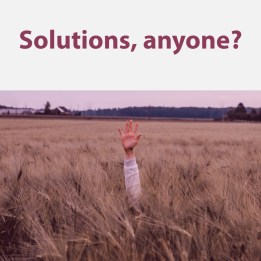
 Ok, that image is a bit dramatic, but it the way I feel most of the time in my job. People don’t really care about art and it takes a back seat. However, I find that most of my student do care about what we do in class and what they learn and they put time and effort into their art. For them (and me) art should not be the back seat in instruction or the additional piece to the lesson, but that has been an obstacle for me for my entire teaching career because arts integration is not valued in the schools I have worked in. However, with the addition of technology integration in my courses in the past few years, some people have begun to take notice that art and technology can live in the same house…

So, my school has internships and many students were trying to get internships in graphic design firms or web design companies but they were getting turned away; they had no skills and experience and most had no clue about how to set up a website for their art or other courses. So we made websites! And they are AMAZING! Arts and technology integration with real-world skills at work! I am impressed with their visual expression and their application of technology tools
I recently read an article about arts integration and cognitive development in which the author discussed the importance of context and culture in arts integration and how thematic units were showing evidence of student learning when arts integration is thoughtfully embedded in activities (Baker, 2013). Arts integration is ripe for transformation with technology tools and there are some viable solutions to make that happen. Here are a few I can think of right now:
1) Create ceramics or art lesson that are technology integrated with ceramics or art as the main component and the other disciplines as secondary, yet vital to the learning.
2) Integrate technology with social constructivist methods, using technology as a core component of a community of inquiry (Garrison & Akyol, 2012).
3) Promote reflective practice throughout ceramics and art projects with technology tools and Web 2.0 tools to enhance and scaffold discourse between students and to promote knowledge, skills, and attitudes into learning experiences.
4) Create authentic learning experiences for students that involve real-world applications of technology. Like my students designing websites to showcase their art and schoolwork.
Why keep technology tools in the hands of adults when the future is in young people’s hands?
Resources
Baker, D. (2013). Art integration and cognitive development. Journal for learning through arts, 9 (1) Retrieved through https://escholarship.org/uc/item/9wv1m987
Garrison, D. R., & Akyol, Z. (2012). The community of inquiry theoretical framework. In Moore, M. G. (2013). The community of inquiry theoretical framework. In Handbook of Distance Education (pp. 104 – 117). New York, NY: Routledge.
 Amy's EdTech 541 Blog Spring 2019
Hi Amy!
This was such a great post! I really enjoyed reading it and found it very interesting. You face many additional obstacles integrating technology into ceramics than I have to worry about with ELA. My favorite part about your post is that despite the challenges, you find solutions. I especially like that you had your students create websites. What an excellent way of integrating technology and helping your students showcase their artistic abilities. Thank you for such an interesting post!
LikeLike